Department of Education
12/24/2024 2026-09-25 11:38Department of Education
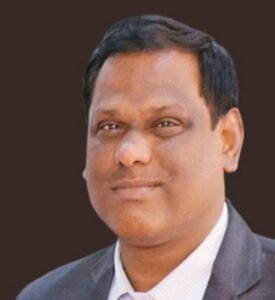
Head of the Department
Dr. Prakash Chandra Jena
Professor, Department of Education
- +91 9876654904
- dr.pcjena@apupsg.ac.in
About the Department
The Department of Education, established on July 1, 2022, in tandem with the inception of Arunachal Pradesh University, Pasighat, represents a dynamic and forward looking academic unit committed to excellence in teaching, research, and community engagement. Although formally instituted at the university’s foundation, the department became fully operational following its approval in the 1st Executive Council Meeting held on May 23, 2023, marking the beginning of its structured academic and administrative functions. Since then, it has rapidly evolved into a vibrant intellectual hub, fostering critical inquiry, pedagogical innovation, and interdisciplinary scholarship in the field of education. With a strong emphasis on both theoretical foundations and practical applications, the department currently offers Postgraduate (Master of Arts. in Education) and Doctoral (Doctor of Philosophy in Education) programmes designed to cultivate highly skilled educators, researchers, and policy thinkers. Its curriculum is thoughtfully crafted to address contemporary educational challenges while remaining grounded in philosophical, psychological, and sociological perspectives of education. Furthermore, the department is dedicated to promoting research that contributes to regional, national, and global educational development, particularly with sensitivity to the unique socio-cultural context of Northeast India. Through its commitment to academic rigor, inclusivity, and innovation, the Department of Education aspires to play a transformative role in shaping the future of education and knowledge production.
Vision
The Department of Education envisions becoming a centre of excellence in teacher education, research, and policy development. Its vision is to:
- Foster high standards of teaching, learning, research, and academic scholarship in the field of education.
- Develop intellectually competent, socially responsible, and ethically grounded educators, researchers, and educational leaders.
- Promote innovative, interdisciplinary, and evidence based research addressing emerging educational issues at regional, national, and global levels.
- Cultivate creativity, critical inquiry, problem-solving abilities, and lifelong learning among students and scholars.
- Respond sensitively to the diverse cultural, social, educational, and developmental needs of Northeast India and the nation.
- Facilitate the advancement of knowledge and contribute to the transformation of educational policies, practices, and institutions.
- Encourage educational practices that uphold equity, inclusion, social responsibility, and sustainable development.
Mission
The Department of Education is committed to fulfilling its vision through the following missions:
- Deliver high-quality postgraduate and doctoral programmes that integrate theoretical foundations with practical applications in education.
- Equip students and scholars with the knowledge, skills, competencies, and professional attitudes required for careers in teaching, research, administration, and educational leadership.
- Encourage interdisciplinary, empirical, and innovative research addressing contemporary educational challenges at local, regional, national, and global levels.
- Foster integrity, academic responsibility, ethical conduct, social justice, inclusivity, and respect for human dignity.
- Promote research and academic practices that recognise the socio-cultural, geographical, and educational diversity of Northeast India.
- Establish meaningful linkages with communities, educational institutions, policymakers, and other stakeholders to address educational needs and challenges.
- Generate and disseminate knowledge that can inform educational planning, policy formulation, institutional development, and effective educational practices.
- Develop a culture of continuous learning, professional development, intellectual curiosity, and adaptability among students, researchers, and educators.
- Contribute to equitable access to quality education and support educational initiatives aligned with sustainable and inclusive development.
- Create a vibrant academic environment that encourages collaboration, interdisciplinary dialogue, critical reflection, and meaningful knowledge production.
Innovative Pedagogical Practices of the Department of Education:
- Experiential Learning: Emphasis on learning through direct experience, including field visits, internships, and community engagement programs that connect theory with practice.
- Case Based Teaching: Use of real-life educational cases to develop analytical, problem-solving, and decision-making skills among students.
- Blended and Flipped Learning: Integration of digital tools and face-to-face instruction, encouraging students to engage with learning materials before class and participate in interactive sessions during class.
- Research Oriented Teaching: Active involvement of students in action research, dissertations, and academic projects to foster inquiry, critical thinking, and evidence-based understanding.
- Collaborative Learning: Promotion of group discussions, peer teaching, seminars, and workshops to enhance teamwork, communication, and shared learning experiences.
- Use of ICT in Education: Adoption of smart classrooms, e-learning platforms, and multimedia resources to create an engaging and technology-driven learning environment.
- Inclusive Pedagogical Practices: Implementation of learner-centered approaches that cater to diverse learning needs, ensuring equity, accessibility, and participation for all students.
- Reflective Practices: Encouraging students to maintain journals, portfolios, and self-assessment records to develop reflective thinking and continuous self-improvement.
- Continuous and Comprehensive Evaluation: Use of formative and summative assessment methods such as presentations, assignments, projects, and viva voce to ensure holistic evaluation.
- Interdisciplinary Approach: Integration of knowledge from various disciplines to provide a broader perspective and address complex educational issues effectively.
Dr. Prakash Chandra Jena
(M.A., M.Sc, M.Phil, Ph.D)
Professor, Department of Education
- +91 9876654904
- dr.pcjena@apupsg.ac.in

Dr. Kaling Moyong
(M.A., Ph.D., NET)
Assistant Professor, Department of Education
- +91 9862636999
- lilingkaling@apupsg.ac.in

Dr. Omini Ering
(M.A, B.Ed, NET/JRF, Ph.D)
Assistant Professor, Department of Education
- +91 9862636999
- omini@apupsg.ac.in

Ms. Pratiksha Sharma
(M.A., B.Ed, NET, Ph.D Ongoing)
Assistant Professor, Department of Education
- +91 9862636999
- pratikshasharma@apupsg.ac.in
Course Structure of M.A. Education Programme
A two-year postgraduate programme designed in alignment with the principles and framework of the National Education Policy (NEP) 2020, focusing on developing advanced knowledge, critical understanding, and professional competencies in the field of education.
Candidates seeking admission to the M.A. Education Programme shall possess a Bachelor’s degree from a recognized University/Institution, subject to fulfilment of the eligibility requirements and academic standards prescribed by the University. Candidates shall be eligible under any one of the following categories:
1.1 Bachelor’s degree with Education as a Honours/Major subject, with a minimum of 45% marks in aggregate.
1.2 Bachelor’s degree with Education as a Pass/Minor subject, with a minimum of 45% marks in aggregate.
1.3 Bachelor’s degree with B.Ed. or B.El.Ed., with a minimum of 45% marks in aggregate.
Relaxation in the minimum qualifying marks for candidates belonging to reserved categories shall be applicable in accordance with the reservation policy and norms of the Government of Arunachal Pradesh, as amended from time to time, and the applicable University rules.
Course Structure of Ph.D Programme
A doctoral programme dedicated to advanced research and scholarly inquiry, with emphasis on educational foundations, policy analysis, and addressing regional as well as contemporary challenges in the field of education.Applicants seeking admission to the Ph.D. Programme in Education shall hold a Master’s degree in Education (M.A. Education/M.Ed.) or an equivalent qualification from a recognized University/Institution, with at least 55% marks in aggregate or an equivalent grade in a point scale, wherever a grading system is followed, in accordance with the University Grants Commission (Minimum Standards and Procedure for Award of Ph.D. Degree) Regulations, 2022 and the applicable Arunachal Pradesh University regulations. Relaxation in the minimum qualifying marks for candidates belonging to reserved categories shall be provided in accordance with the applicable UGC Regulations and the norms of the Government of Arunachal Pradesh, as amended from time to time.